art education

Kids online

Thursday, December 21st, 2006
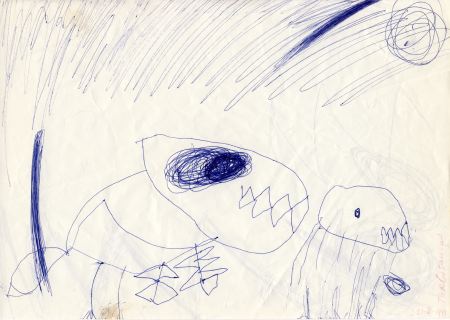
Not long ago, Françesca enjoyed typing random letters into a text editor for about ten minutes a day. Now that she is nearing five years old, that doesn’t satisfy her any longer. She learned how to use the mouse, and she’s beginning to understand how to use the Safari web browser. She can spend an hour on-line without a break.What to do? This is the point where Hanneke and I have a choice. We can take the computer away and have our kids grow up in a “traditional” pre-internet household. Or we can let them go online and accept the consequences.

I am of two minds about this. One view is that the kids should be able to grow up in an internet-free home, the way we grew up. The opposing view is that the kids should go online because the internet is part of the world we live in — keeping the kids away from it would be like refusing to let them learn to read or write.

I am torn between these two views, but I am leaning toward letting her go online because:

  1. Our kids will come into contact with the internet no matter what we do.
  2. By guiding her internet use at home, we can help Fran find and be involved in the positive things on the internet; for example, looking at artwork by other children her age.
  3. The internet is intensely stimulating, of course. My response is that we need to make our “off-line” home environment even more fun, more stimulating, so that the internet is not such a magnet for the kids.

Anyone else out there with similar problems / opportunities?

Interview with Walter Bartman

Monday, November 20th, 2006

Walter Bartman was my art teacher in high school in 1984-86 in Bethesda, Maryland. Students of “Mr. Bartman” were ten times more likely to become Presidential Scholars in Visual Arts than students in other art classes in the United States. Although he retired from high school teaching in 2001, Walter Bartman continues to teach landscape painting in Maryland and in workshops across the U.S. and in Europe.

Artwork in this post is plein air painting by Walter Bartman [click images to enlarge]. This interview was edited for publication together with Leslie Holt
(more…)

What do students want from an art education?

Monday, October 9th, 2006

Simple: to learn how to make a living as an artist. Art school education, no matter how stimulating, cannot be considered complete if the graduates need to seek other employment in order to support part-time, non-profitable art making.

Of course, the question of “how to make a living as an artist?” is not trivial. It brings together two things: 1) being an artist, with all the personal expression and integrity implied; and 2) how to live from this. Combining 1) and 2) is a serious topic for research. This should be one of the functions of an art education — to do research into how to sell art.

If how to sell art? is a mystery, then finding the answer will be as exciting as solving any other important problem. Advanced education is not only about learning, but also discovering what is not known.

The only problem is, if art schools could really fulfill their mission, they might loose their faculty — the professors would likely go off and do art full time.

This post was inspired by Bob Martin, who is on the board of an art school and commented “I would be very interested in learning what artists want from a school and an instructor.”

What do you want from an art school and instructor?


[Thanks to those of you writing the great comments, David Palmer in particular, for giving me insight into the art school education, where it succeeds and where it fails.]

Art school controversy

Sunday, October 8th, 2006

The is art school worthless? question brought in some amazing comments. Here are two that make it even harder for me to make up my mind on the issue:

Art dealer Dan Fox said “nearly every fine artist of any repute either went to art school or studied with a master for years, or both.”

Artist Rex Crockett replied, “I know a lot of artists who make good livings at art. About half of them went to art school, and half of those, like me, dropped out in disgust. (I lasted one day.)”

Now, how do we reconcile these views?

. . .

When I am feeling adventurous, I cross-post my blog entries on the unmoderated news group rec.arts.fine. If a blog is cosy like a living room (to paraphrase Arthur), rec.arts.fine is like a New York city street at night. You never know who might attack you, but they are bound to be someone interesting. [I add emphasis to quotes below]

Dan Fox asked if I went to art school, and when I replied in the negative, he wrote:

The foundation courses you get in art school, drawing in particular, are crucial to becoming a competent artist. This means regular classes, lots of drawing, lots of teaching, over a period of time. Learning to draw is like learning to play the piano. Books and workshops contribute very little.This is the reason nearly every fine artist of any repute either went to art school or studied with a master for years, or both. The exception is the genius like Francis Bacon, but these people are rare.

Before I could reply, Rex Crockett dropped this bombshell:

Nonsense. What is rare are people who are willing to repudiate a failed education.Good repute? With whom? Galleries, museums, the press, and the buying public do not care at all, not at all, whether you have a degree in art. It simply does not matter. It never did. It never will. I know a lot of artists who make good livings at art. About half of them went to art school, and half of those, like me, dropped out in disgust. (I lasted one day.) This idea that “It is really hard to survive as an artist” is one of the biggest lies ever told. The reason it is so hard for so many is because their work is crap.

Rex doesn’t have much sympathy for artists who don’t sell, does he?

I think that Dan Fox is making a strong statement without providing any evidence. Rex brings in the weight of personal experience, but I think he misses a key point: some artists find it difficult to make money because they continually push themselves to do things that are extremely challenging. It doesn’t mean their work is crap, but it might mean they are not being practical.

There is more to this debate to be read on the complete rec.arts.fine thread.

Thanks to Courtney, Bob, Tracy, David, and Angela for your insightful comments on the original post at my blog.

One lack of comment I found interesting is that no one disputed my statement: “In art, professors and students do not generally collaborate in the process of creation and discovery in the same meaningful sense as they do in science.”